
Regular physical activity is one of the most important recommendations for people with Parkinson’s. But what if a leg amputation makes cycling even more difficult? Jan was looking for a way to stay active – and discovered the Kettwiesel ONE HANDBIKE from Hase Bikes, a hand-powered recumbent trike that opened up new possibilities for him.
Mobility despite Parkinson’s: Why staying active is so important
When Jan was diagnosed with Parkinson’s in 2022, his everyday life changed once again. Muscle stiffness, fatigue and increasing limitations on his mobility made many things more difficult. Yet he had already fought his way back to an active life once before: following a serious infection, one of his legs had to be amputated around 25 years ago. With a high-quality prosthesis, he was able to return to work, family life and sport. Parkinson’s, however, presented him with new challenges.
That was precisely why Jan was unwilling to accept physical activity playing an ever smaller role in his life. He began searching for a handbike for people with disabilities – a solution suited to his physical abilities that would allow him to rediscover the joy of movement.
The Kettwiesel ONE HANDBIKE as a new possibility
His search led him to the Schaltwerk, the Hase Bikes flagship store in Waltrop. There he discovered the Kettwiesel ONE Handbike – a hand-powered recumbent trike that offers people with limited leg function a comfortable and safe way to regain independent mobility. As an electric recumbent handbike, it combines stability, ergonomics and electric assistance.
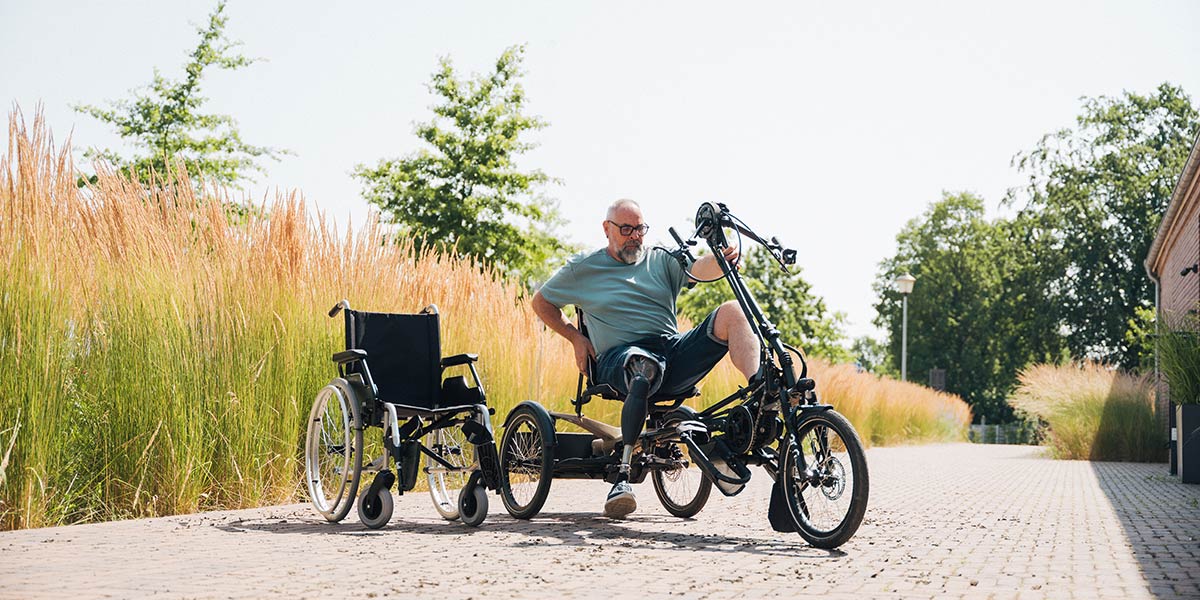
During an extended test ride, Jan quickly realised that it was not so much the technology that won him over as the riding experience. After around two and a half hours on the trike, he could certainly feel it in his arms and shoulders, but more importantly, he had rediscovered something he had been missing for a long time: the joy of movement.
“I’m not interested in breaking records. I want to move. And I want to enjoy moving.”
A handbike for Parkinson’s: More than a specialised cycle
For Jan, the Kettwiesel ONE HANDBIKE is far more than a means of transport. It gives him the opportunity to stay active despite Parkinson’s and amputation and to spend time outdoors regularly again. A hand-powered trike can offer people with balance problems or limited leg function a safe alternative to a conventional bicycle.
In his view, adaptive cycles like these should be presented much more often in neurological rehabilitation. Having the chance to try different mobility solutions may help people discover a form of physical activity that supports their health in the long term and helps them remain independently mobile for as long as possible.
Mobility as an investment in quality of life
Jan does not yet own a handbike of his own. Individually adapted equipment is a significant investment that needs careful consideration. At the same time, he is convinced that increased physical activity not only improves quality of life, but can also help to avoid follow-on healthcare costs in the long term. That is why he would like to see health insurers and rehabilitation facilities provide greater support for mobility solutions like these in future.
His story shows that mobility can remain possible despite Parkinson’s and after a leg amputation. Sometimes it does not take records or peak performance – just the right mobility aid and the willingness to try new paths.
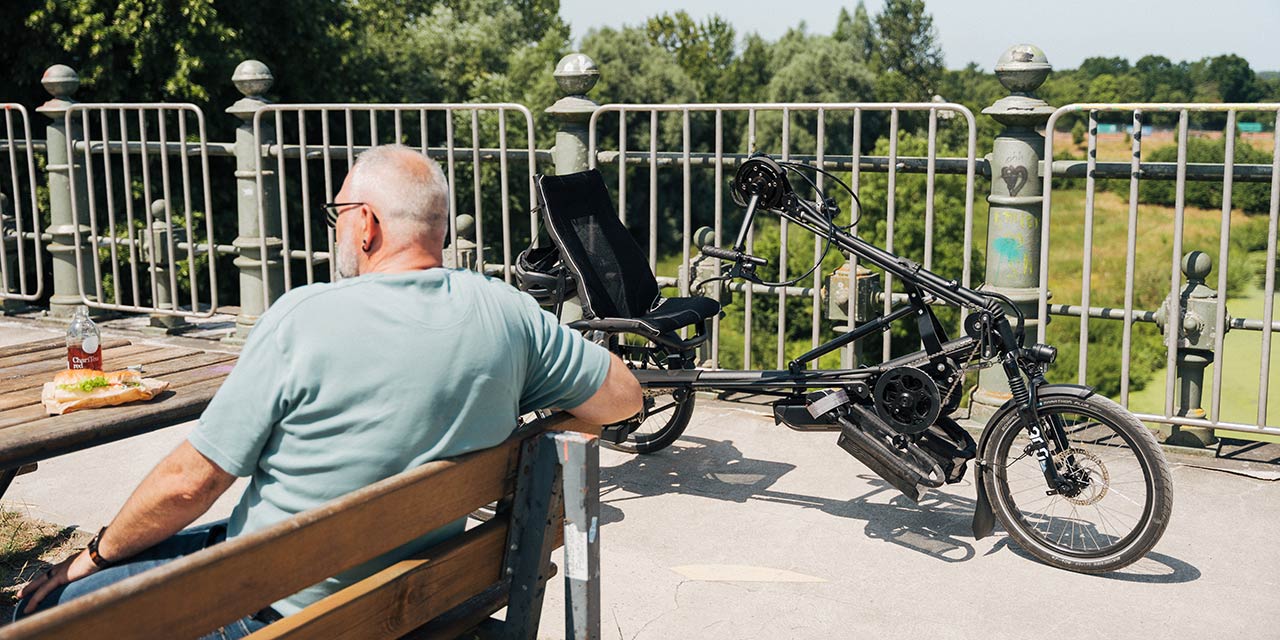
Real Stories, Real People, Real Bikes
On our blog, we not only post stories about real people whose lives were changed by our bikes,
but also share information about Hase Bikes events
in Waltrop and worldwide.

36 years of friendship on the Kettwiesel TWO
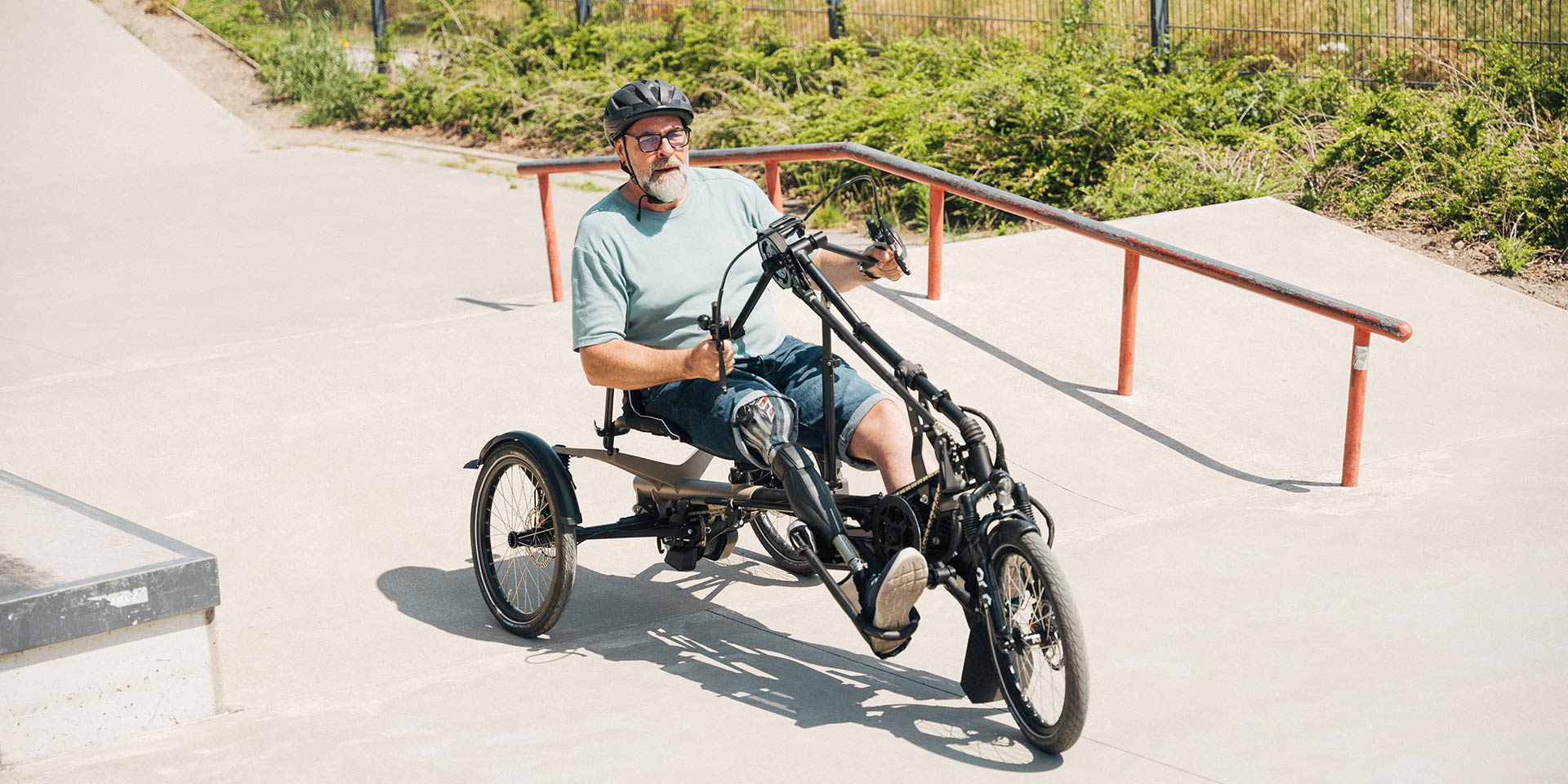
Staying mobile despite Parkinson’s and amputation: New perspectives with the Kettwiesel ONE Handbike
